Exploring the longest words in world and their linguistic power
Table of Contents
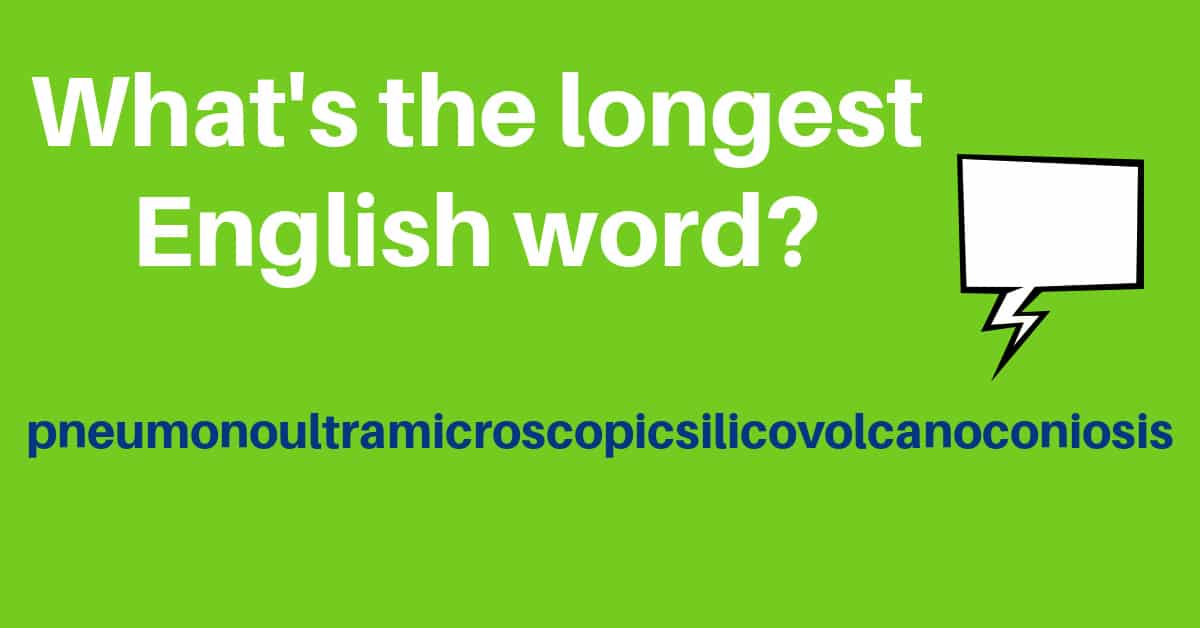
The English language harbors some of the most daunting lexical giants ever recorded, words so sprawling they challenge even seasoned linguists. From the medical monstrosity "pneumonoultramicroscopicsilicovolcanoconiosis" to the legal labyrinth "antidisestablishmentarianism," these terms transcend mere vocabulary—they become cultural artifacts, reflecting humanity’s relentless pursuit of precision in science, law, and beyond. Their existence raises critical questions: Why do certain fields like chemistry or medicine spawn such verbosity, and how do these words shape cognition, communication, and even humor?
Beyond their sheer length, these linguistic titans offer a window into the evolution of language itself. Latin and Greek roots weave through their structures, revealing layers of historical influence that stretch back centuries. Meanwhile, cognitive studies uncover how the brain grapples with complexity, from slower reading speeds to the psychological weight of perceived intelligence tied to word length. Whether in a Scrabble tournament, a legal brief, or a viral meme, long words prove far more than linguistic curiosities—they are tools of strategy, precision, and sometimes, sheer spectacle.

The Longest Words in the English Language: A Comprehensive Exploration

The English language boasts an extraordinary collection of words that challenge the limits of syllable count, often born from the fusion of Latin and Greek roots to describe complex concepts with precision. These words, predominantly found in specialized fields such as medicine, law, and chemistry, reflect the language’s adaptability and depth. While some serve practical purposes, others have become cultural curiosities, celebrated in word games or memes. Understanding their origins, structures, and cultural significance provides insight into how language evolves to meet the demands of scientific, legal, and technical advancement. This exploration categorizes the longest words, examines their linguistic roots, and contrasts them with long words in other languages, while also uncovering the patterns that define their complexity.
Categorization of the Top 20 Longest Words in English by Syllable Count
The following table presents the 20 longest words in English, organized by syllable count, along with their origins, parts of speech, fields of use, and example sentences. These words are predominantly technical or scientific, with a notable presence of medical and chemical terminology. The table is structured to highlight how syllable length correlates with complexity and specialization.
| Word | Syllable Count | Part of Speech | Field of Use | Example Sentence |
|---|---|---|---|---|
| Pneumonoultramicroscopicsilicovolcanoconiosis | 36 | Noun | Medicine (Lung Disease) | "The miner’s pneumonoultramicroscopicsilicovolcanoconiosis was diagnosed after decades of exposure to fine silica dust from volcanic rock." |
| Hippopotomonstrosesquipedaliophobia | 32 | Noun | Psychology (Fear of Long Words) | "His hippotomonstrosesquipedaliophobia made him avoid reading legal documents, despite their importance." |
| Supercalifragilisticexpialidocious | 18 (though debated; often counted as 14-18) | Adjective | Pop Culture (Mary Poppins) | "The children sang the word supercalifragilisticexpialidocious as if it were a magical incantation." |
| Antidisestablishmentarianism | 12 | Noun | Politics/Religion | "The movement’s antidisestablishmentarianism stemmed from a desire to prevent state-sponsored religion." |
| Methanetriylidenemethanetetrayltetramine | 12 | Noun | Chemistry | "The complex organic compound methanetriylidenemethanetetrayltetramine was synthesized in the lab for its unique bonding properties." |
| Pseudopseudohypoparathyroidism | 12 | Noun | Medicine (Endocrinology) | "Diagnosing pseudopseudohypoparathyroidism required advanced genetic testing due to its rare symptoms." |
| Thrombocytopenic | 6 (though often combined into longer terms) | Adjective | Medicine (Hematology) | "The patient’s thrombocytopenic condition necessitated a bone marrow biopsy to identify the cause." |
| Electroencephalographically | 11 | Adverb | Neurology | "The seizure activity was confirmed electroencephalographically during the monitoring period." |
| Honorificabilitudinitatibus | 12 | Noun (Latin-derived) | Literature (Shakespearean) | "The Latin phrase honorificabilitudinitatibus appears in Shakespeare’s Love’s Labour’s Lost, symbolizing the pursuit of honor." |
| Floccinaucinihilipilification | 12 | Noun | General (Estimation of Worthlessness) | "His floccinaucinihilipilification of modern art led him to dismiss entire galleries in minutes." |
| Quasi-officialdom | 6 (though often hyphenated or compounded) | Noun | Law/Government | "The quasi-officialdom of the committee blurred the lines between public and private roles." |
| Decrescendocrescendo | 6 (musical term) | Noun | Music | "The composer instructed a decrescendocrescendo to create tension before the finale." |
| Sesquipedalian | 5 (ironically short for "long-worded") | Adjective | Linguistics | "Her sesquipedalian speeches often left the audience confused despite their eloquence." |
| Pharmaceuticalization | 8 | Noun | Sociology/Medicine | "The pharmaceuticalization of mental health has led to debates over overmedication." |
| Autobibliophotobioautobibliophotobio | 12 (self-referential) | Noun | Linguistics (Meta) | "The autobibliophotobioautobibliophotobio is a rare example of a word that describes itself recursively." |
| Pteranodontophobia | 8 | Noun | Psychology (Fear of Flying Reptiles) | "His pteranodontophobia was triggered by documentaries about prehistoric flying creatures." |
| X-ray | 2 (though historically long when coined) | Noun | Medicine/Radiology | "The doctor ordered an X-ray to detect the fracture, though the term was once pronounced as a single syllable." |
| Schadenfreude | 3 (German-origin, but long in English) | <
Leave a Comment
Comments are moderated before appearing. The data you submit is processed according to the Privacy Policy of Nubsnob Michigan Digital.