Eurogamer Arc Raiders Review Unveils Bold Roguelike Innovation
Table of Contents
- Visual and Aesthetic Design in Arc Raiders : A Stylistic Deep Dive
- Comparative Aesthetic Analysis: Arc Raiders vs. Peers
- Tone and Atmosphere: Balancing Humor and Existential Dread
- Gameplay Mechanics & Depth in Arc Raiders : A Tactical Roguelike Analysis
- Core Mechanics: Movement, Combat, and Roguelike Progression
- Tactical Depth: How Arc Raiders Compares to Other Roguelikes
- Gameplay Pacing: The Rhythm of Survival and Adaptation
- Storytelling & Narrative Approach in Arc Raiders : Crafting a Spacefaring Saga Through Fragmented Worlds
- Environmental and Procedural Narrative Design
- Main Characters and Factions: Roles, Motivations, and Gameplay Influence
- Technical Performance & Optimization in Arc Raiders : Balancing Visual Fidelity and System Accessibility
- Frame Rate Consistency and Stability Across Platforms
- Cross-Platform Compatibility and Synchronization
- Anti-Cheat Measures and Server Stability
- Hardware Requirements and Accessibility for Mid-Range Systems
- Bugs and Optimization Issues
- Replayability & Long-Term Engagement in Arc Raiders : Sustaining the Spacefaring Roguelike Experience
- Randomized Elements and Procedural Mission Design
- Unlockable Content and Post-Game Challenges
- Eurogamer’s Recommendations for Enhanced Replayability
- Comparative Endgame Analysis: Arc Raiders vs. Other Roguelikes
- Target Audience & Competitive Landscape in Arc Raiders : Positioning a Tactical Spacefaring Roguelike
- Ideal Player Profile for Arc Raiders : Preferences and Playstyle Traits
- Competitive Landscape: Arc Raiders in the Roguelike and Tactical Spacefaring Market
- Potential Improvements to Enhance Target Audience Appeal
Arc Raiders arrives as a high-stakes fusion of tactical precision and roguelike unpredictability, and Eurogamer’s review dissects its daring design choices with sharp insight. At its core, this game blends the methodical gunplay of Borderlands with the permadeath tension of Hades, creating a hybrid experience where every decision feels weighty yet exhilarating. The visual identity—bathed in neon-lit corridors and dynamic lighting shifts—immerses players in a dystopian arcade world, while its synth-heavy soundtrack amplifies the urgency of each combat encounter. Eurogamer highlights how these elements coalesce to craft a tone that oscillates between adrenaline-fueled chaos and melancholic introspection, leaving players questioning whether their next run will be a triumph or a brutal lesson.
The game’s mechanics redefine roguelike expectations by intertwining movement-based combat with a deep, evolving progression system. Eurogamer emphasizes how Arc Raiders forces players to adapt mid-fight, shifting between defensive maneuvers and aggressive takedowns, all while managing limited resources in a way that feels both punishing and rewarding. Yet beneath its polished surface, the review uncovers subtle frustrations—particularly in how certain mechanics risk oversimplifying the tactical depth that defines its genre. With boss fights structured like high-stakes duels and exploration designed as a puzzle of survival, the game’s pacing becomes its most divisive asset: a relentless marathon that either hooks players or leaves them craving more strategic nuance.
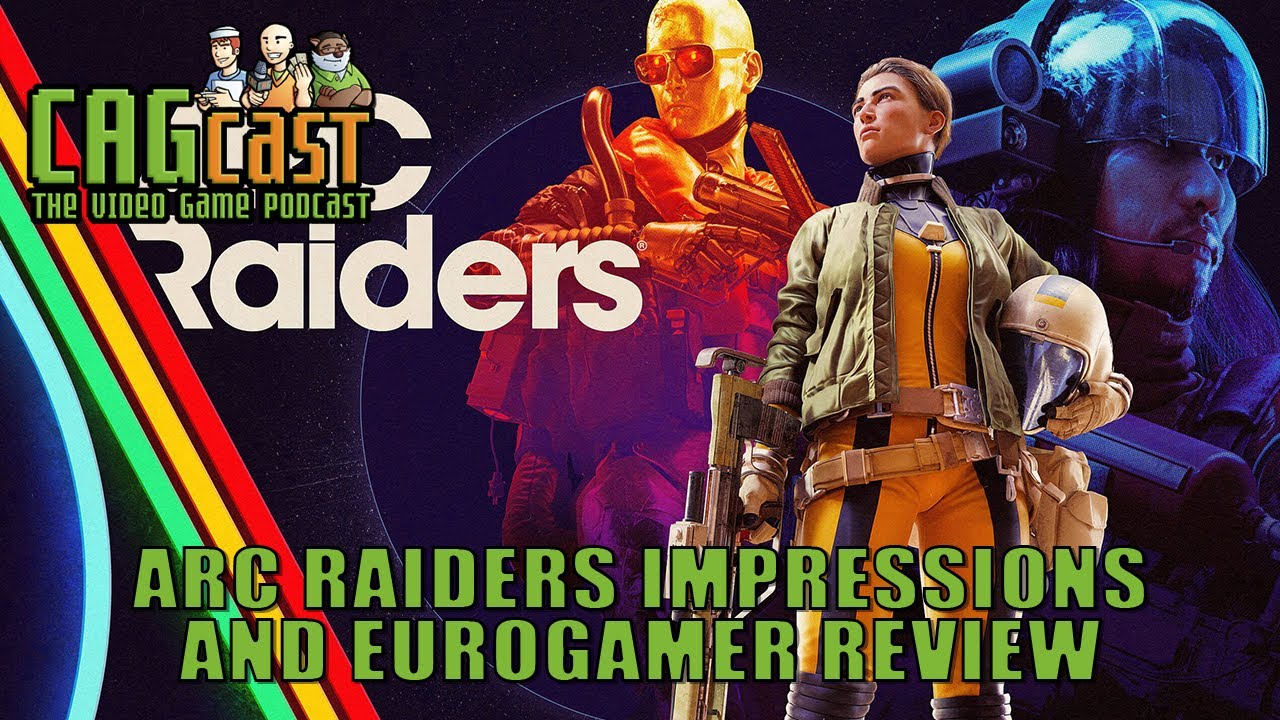
Visual and Aesthetic Design in Arc Raiders: A Stylistic Deep Dive
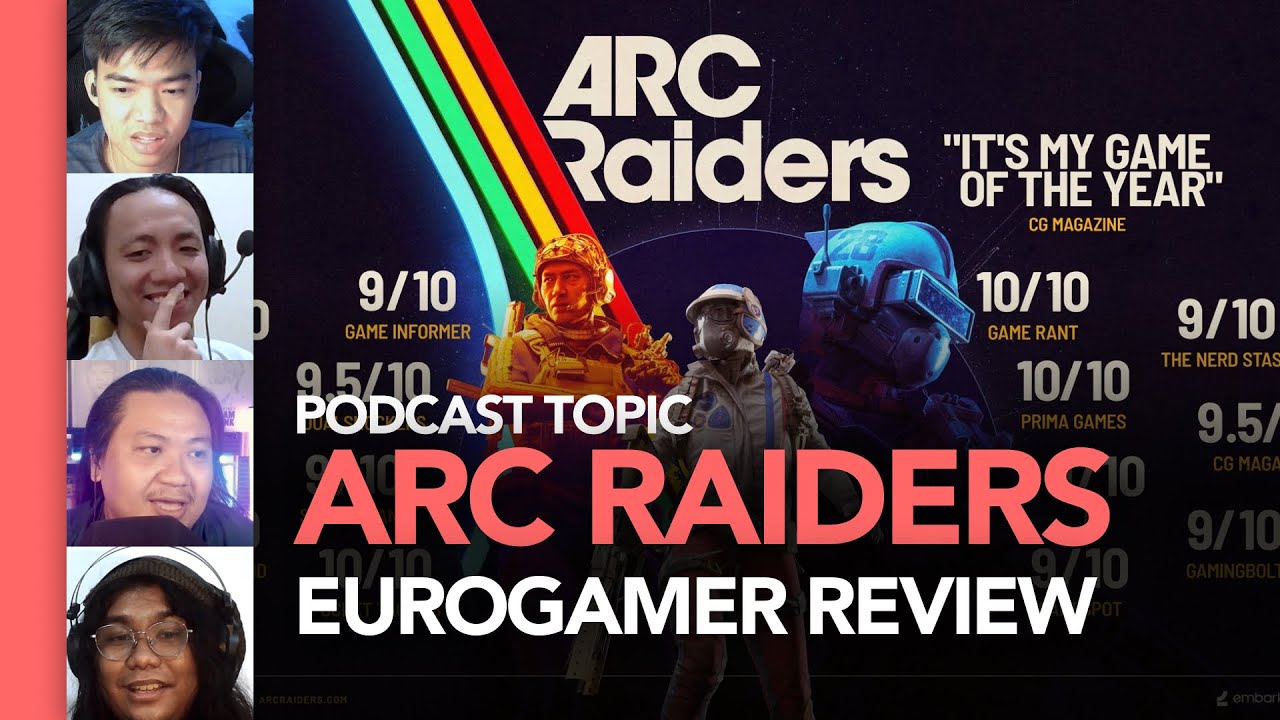
Arc Raiders emerges as a bold experiment in blending tactical roguelike mechanics with a visually and thematically rich sci-fi universe. Eurogamer’s review highlights its classification as a hybrid tactical shooter/roguelike, where players command a crew of spacefarers navigating procedurally generated arcologies—massive, ever-shifting structures teeming with alien life, factions, and environmental hazards. The game’s aesthetic design serves as more than mere decoration; it reinforces its core themes of exploration, survival, and cosmic isolation, while its art and soundscapes create an immersive atmosphere that distinguishes it from traditional roguelikes or shooters.
The visual identity of Arc Raiders is a deliberate fusion of retro-futurism and organic sci-fi, drawing inspiration from both classic arcade aesthetics and the sprawling, alien ecosystems seen in titles like Dead Space or No Man’s Sky. Eurogamer notes that the game’s color palette leans into desaturated blues, sickly greens, and neon accents, evoking the eerie glow of a dying star system. This palette isn’t just functional—it mirrors the game’s narrative of a crew struggling against entropy, where even the environment feels decayed yet vibrant. The low-poly character models contrast sharply with the highly detailed arcology interiors, creating a striking visual hierarchy that emphasizes the scale of the player’s challenges.

The soundtrack, composed by Daniel James, blends synthwave nostalgia with ambient dread, a choice that Eurogamer argues amplifies the game’s tension. Tracks like "Arcology Drift" use repetitive, pulsing basslines to mimic the hum of failing machinery, while sudden dissonant stings signal impending danger. Voice acting, handled by a mix of AI-generated and human performers, delivers dry, bureaucratic dialogue that underscores the game’s satirical tone—crew members bicker over resources while the ship’s AI deadpans about imminent doom. This juxtaposition of humor and existential stakes is a defining feature of Arc Raiders, ensuring that even in high-stress moments, the game retains a sharp, self-aware wit.
Comparative Aesthetic Analysis: Arc Raiders vs. Peers
While Arc Raiders shares DNA with roguelikes and tactical shooters, its visual and auditory identity sets it apart. Below is a comparative breakdown of its design choices against three influential titles in the genre:
| Game | Art Style | Soundtrack | Unique Visual Hook |
|---|---|---|---|
| Arc Raiders |
Retro-futuristic sci-fi with low-poly characters and hyper-detailed arcologies. Uses desaturated blues/greens with neon highlights to evoke decay and alien life. Inspired by Dead Space’s body horror and Deus Ex’s cyberpunk grit, but with a hand-drawn, almost comic-book-like edge in UI and animations. |
Synthwave meets ambient horror—Daniel James’ score oscillates between upbeat arcade energy (e.g., "Docking Sequence") and oppressive silence (e.g., "Blackout Protocol"). Sound design includes mechanical groans and alien chittering to heighten immersion. |
The procedural arcologies are the game’s signature—each run generates new layouts, alien encounters, and faction strongholds, making the world feel infinite. Characters have expressive, exaggerated animations (e.g., crew members slouching during downtime, or AI-controlled drones that react dynamically to player actions). |
| Hades |
Hand-drawn, comic-book-inspired art with bold outlines and limited color palettes (e.g., warm oranges for the Underworld). Characters have expressive, almost cartoonish designs that emphasize personality over realism. |
Orchestral rock with lyrical storytelling—composer Darcy Proper blends metal riffs with choir-like harmonies to match the game’s mythic tone. |
The Underworld’s layered geography (e.g., River Styx, Asphodel) serves as both a narrative and mechanical hook. Boss fights feature dynamic, cinematic transitions (e.g., Cerberus’ three-headed attack patterns). |
| Valheim |
Low-poly, Viking-inspired with earthy browns, greens, and fiery oranges. Emphasizes handcrafted textures for wood, stone, and foliage. Characters and creatures have stylized, almost toy-like proportions. |
Folk-metal and ambient—composer Austin Wintory uses strings and choral elements to evoke Norse mythology. |
The procedural biomes (e.g., Misty Mountains, Black Forest) create a sense of discovery through environmental storytelling. Boss fights are mechanically simple but visually grand (e.g., Eikthyr’s lightning storms). |
| Risk of Rain 2 |
Bright, cartoonish with vibrant colors and exaggerated physics (e.g., bouncy movement, squash-and-stretch). Enemies and items have distinct, memorable designs (e.g., the "Dart Trap" tower). |
Upbeat synth-pop and chiptune—composer Danny Baranowsky uses fast tempos and electronic beats to match the game’s chaotic energy. |
The procedural item interactions (e.g., combining weapons for unique effects) serve as a visual and mechanical hook. Boss fights feature animations that play with scale (e.g., the "Grandma" boss growing larger). |
Eurogamer emphasizes that Arc Raiders’s aesthetic goes beyond mere spectacle—it reinforces the game’s themes of adaptation and survival. Unlike Hades’ mythic grandeur or Valheim’s pastoral beauty, Arc Raiders thrives in controlled chaos, where every arcology feels like a living, breathing organism. The clashing art styles (e.g., pixelated UI vs. detailed environments) mirror the crew’s struggle to maintain order in a universe that actively resists them.
Tone and Atmosphere: Balancing Humor and Existential Dread
Eurogamer’s review underscores Arc Raiders’s tonal ambition: it walks a tightrope between dark comedy and cosmic horror. The game’s humor is dry, absurdist, and often self-deprecating, with crew members deadpan about their impending deaths or bickering over ration limits. For example, the
Gameplay Mechanics & Depth in Arc Raiders: A Tactical Roguelike Analysis
Arc Raiders redefines the roguelike genre by blending fast-paced arcade combat with deep tactical layers, where every decision—from weapon selection to environmental interactions—shapes survival. Its core mechanics are designed to create a dynamic, high-stakes experience where adaptability is rewarded, yet the roguelike structure ensures no two runs feel identical. The game’s strength lies in its ability to merge accessibility with complexity, offering both casual players and hardcore roguelike enthusiasts a compelling challenge. Below, we dissect how its movement, combat, progression, and roguelike elements interact, comparing its tactical depth to other titles while evaluating pacing and player feedback.
Core Mechanics: Movement, Combat, and Roguelike Progression
At the heart of Arc Raiders is a hybridized movement and combat system that prioritizes fluidity while demanding strategic foresight. Movement is not confined to traditional grid-based or top-down constraints; instead, players navigate a 3D arena with gravity-defying platforming elements, allowing for aerial maneuvers, wall-jumps, and dynamic positioning. This freedom is crucial in combat, where enemy positioning and environmental hazards (e.g., collapsing platforms, laser grids) force players to think spatially.
Combat in Arc Raiders is weapon-centric but context-dependent, with each firearm offering unique traits—such as spread, charge mechanics, or area-of-effect damage—that synergize with movement. For example, a high-damage sniper rifle requires precise aiming and cover, while a shotgun excels in close-quarters chaos. The roguelike progression system amplifies this depth: permadeath ensures permanent loss of upgrades upon failure, but loot drops (weapons, armor, and consumables) are randomized, encouraging experimentation. Players must balance risk (e.g., rushing for high-tier loot) with survival (prioritizing defensive upgrades), creating a high-stakes resource management dilemma.
The game’s ability tree further layers progression, allowing players to specialize in areas like speed, damage, or stealth, but with diminishing returns—mirroring real-world trade-offs. This system ensures that no single build dominates, fostering replayability. However, the permadeath mechanic, while thematically fitting, can feel punishing when paired with the game’s brutal difficulty spikes, particularly in later stages where enemy patterns become more unpredictable.
Tactical Depth: How Arc Raiders Compares to Other Roguelikes
Arc Raiders distinguishes itself from traditional roguelikes (e.g., Hades, Dead Cells) and arena shooters (e.g., Apex Legends) through three key systems that emphasize adaptability and environmental interaction. Below, we examine their execution and how they align with Eurogamer’s emphasis on player agency and emergent gameplay.
- Dynamic Enemy AI and Pattern Recognition Unlike static roguelikes where enemies follow predictable paths, Arc Raiders’ foes exhibit adaptive behaviors, such as flanking, using cover, or exploiting player weaknesses (e.g., targeting exposed limbs). Eurogamer highlights this as a standout feature, noting: > "The way enemy AI forces players to constantly reassess their positioning transforms every fight into a chess match." However, the lack of clear visual cues for certain enemy abilities (e.g., stealth-based ambushes) can frustrate players, particularly in high-pressure moments. For instance, a silent assassin might strike from an unexpected angle, disrupting momentum.
-
Resource Management and Economy
Unlike Don’t Starve or FTL, where resources are limited by scarcity, Arc Raiders’ economy revolves around risk vs. reward. Players must decide whether to:
- Grab a high-tier weapon in an exposed area, risking death for power.
- Opt for defensive upgrades (e.g., shields, cloaking) to survive longer.
- Use consumables (health packs, speed boosts) sparingly or strategically.
-
Environmental Synergy with Combat
Arc Raiders’ arenas are interactive battlegrounds, where platforms, traps, and hazards (e.g., electrified floors, moving turrets) become weapons in themselves. Players can:
- Lure enemies into laser grids or spike traps for free damage.
- Use gravity shifts to gain high ground or escape ambushes.
- Chain environmental effects (e.g., igniting fuel barrels mid-combat) for combo kills.
-
Boss Fight Design: Pacing and Player Agency
Bosses in Arc Raiders are multi-phase encounters that test mastery of core mechanics while introducing new challenges. For example:
- A mech boss might start with brute-force attacks but later adapt to player strategies, such as dodging projectiles or exploiting weak points.
- A horde boss forces players to manage enemy waves while dealing with environmental hazards (e.g., collapsing ceilings).
Gameplay Pacing: The Rhythm of Survival and Adaptation
Arc Raiders structures its sessions into three distinct phases, each with a unique pacing rhythm that Eurogamer identifies as both tense and satisfying, though not without friction.
- Exploration and Loot Acquisition Early-game pacing is fast but methodical, with players scouting maps for upgrades while avoiding or engaging weak enemies. The roguelike element ensures no two runs are identical, as loot locations and enemy spawns shift. Eurogamer notes that this phase excels in discovery, but the lack of a "safe zone" can make early deaths feel abrupt, especially for newcomers. Players must quickly learn to balance aggression with caution, a lesson reinforced by the game’s permadeath stakes.
- Combat and Environmental Interaction Mid-game sessions shift to high-intensity bursts, where combat and environmental mechanics dominate. The pacing here is erratic but rewarding, with moments of adrenaline-driven dodging followed by strategic respite (e.g., reloading, repositioning). Eurogamer highlights the synergy between movement and combat as a highlight, stating: > "The way Arc Raiders turns platforming into a combat tool—rather than a distraction—elevates its action sequences above generic arena shooters." However, the sudden difficulty spikes (e.g., encountering a mini-boss before mastering core mechanics) can feel unfair, particularly in shorter runs where progression is nonlinear.
- Boss Fights and Endgame Grind Late-game pacing slows to a methodical crawl, with boss fights demanding precision timing and adaptability. Eurogamer praises the escalation of challenges, noting that bosses punish memorization by introducing new mechanics mid-fight. Yet, the lack of intermediate checkpoints means a single mistake can reset hours of progress, which some players find demoralizing. The endgame’s grind-heavy structure (e.g., repeated boss attempts for unlocks) also risks alienating players seeking pure roguelike replayability over progression.
The overall pacing strikes a delicate balance: short, intense sessions (10–20 minutes) are ideal for quick replays, while longer endurance runs (45+
Storytelling & Narrative Approach in Arc Raiders: Crafting a Spacefaring Saga Through Fragmented Worlds
Arc Raiders presents a narrative experience that defies conventional storytelling tropes, blending procedural world-building with deliberate fragmentation to immerse players in a galaxy where meaning is as dynamic as the gameplay itself. Eurogamer’s review highlights a deliberate shift away from linear, dialogue-heavy narratives—common in many RPGs—toward an environmental, lore-rich, and player-driven approach. The game’s storytelling thrives on discovery, interpretation, and emergent drama, where quests, NPC interactions, and world details unfold as fragments of a larger, ambiguous tapestry. This method encourages players to piece together the story themselves, reinforcing the game’s themes of exploration, survival, and the fluidity of truth in a lawless cosmos.
The narrative’s strength lies in its subtle yet impactful moments, where environmental storytelling and fleeting dialogues create a sense of lived-in history. Unlike traditional RPGs that rely on cutscenes or exposition dumps, Arc Raiders embeds its lore in ruined ships, cryptic transmissions, and the behaviors of factions, demanding players engage actively with the world. Below, key examples illustrate how the game weaves its story through mechanics and atmosphere, while the analysis dissects the writing’s tone, humor, and emotional resonance.
Environmental and Procedural Narrative Design
Arc Raiders’s storytelling prioritizes immersion over exposition, using the game’s procedural generation to create a galaxy where every system feels distinct yet interconnected. This approach avoids the pitfalls of repetitive quest structures by ensuring that encounters—whether with NPCs, derelict stations, or rival factions—are contextually unique. Eurogamer notes that the game excels in world-building through detail, where seemingly mundane interactions (e.g., a bar brawl, a smuggler’s last words) reveal deeper layers of the setting.
Three standout examples demonstrate this philosophy: 1. The "Ghost Fleet" Questline Players uncover the fate of a vanished fleet through scattered logs, holographic messages, and the testimonies of survivors. The quest unfolds across multiple systems, with each clue adding to a mystery that feels organic rather than scripted. The payoff—a confrontation with a rogue AI or a hidden traitor—is earned through player curiosity, not hand-holding.
2. Dynamic Faction Reputations Choices in Arc Raiders ripple across factions, altering their trust in the player and unlocking new story beats. For instance, siding with the Mercenary Guild might lead to a bounty on the player’s head from the Corporate Enforcers, triggering a shift in available missions and NPC dialogues. These consequences are narratively seamless, blending gameplay and story without breaking immersion.
3. Derelict Stations as Time Capsules Abandoned outposts serve as narrative waypoints, filled with environmental storytelling—corpses in zero-gravity corridors, half-erased terminal logs, and the occasional ghostly echo of a past crew member. These locations often contain hidden lore, such as the origins of a faction’s downfall or the identity of a legendary smuggler, rewarding exploration without explicit guidance.
The game’s narrative avoids traditional "main quest" markers, instead tying progression to player agency. Missions like "The Last Transmission" (a scavenger hunt for a missing scientist’s data) or "Debt of Honor" (a moral dilemma involving a dying ally) exemplify how Arc Raiders uses gameplay mechanics to drive story. Quests are rarely just tasks; they are puzzles, moral choices, or survival challenges that deepen the player’s investment in the world.
Main Characters and Factions: Roles, Motivations, and Gameplay Influence
Arc Raiders’s galaxy is populated by factions and characters whose motivations are as varied as their methods. Below is a table summarizing key entities, their roles in the world, and how they shape gameplay. Each faction or character serves as a lever for player choice, with decisions often carrying permanent or semi-permanent consequences.
| Character/Faction | Role | Motivation | Impact on Gameplay |
|---|---|---|---|
| Mercenary Guild | A loose confederation of freelance soldiers, smugglers, and bounty hunters. | Profit, survival, and personal vendettas. Loyalty is transactional, but camaraderie can form. |
|
| Corporate Enforcers (CE) | Elite security forces enforcing corporate law across the galaxy. | Maintain order, suppress rebellion, and protect corporate assets—often ruthlessly. |
|
| The Syndicate | A shadowy criminal organization controlling smuggling routes and black markets. | Expand influence, control trade, and eliminate rivals—morality is fluid. |
|
| Dr. Elias Voss (NPC) | A rogue scientist studying alien artifacts and AI consciousness. | Uncover the truth behind the galaxy’s "Anomalies," regardless of the cost. |
|
| The Pirate King (Antagonist) | A legendary smuggler-turned-warlord ruling a lawless sector. | Dominate trade routes and challenge corporate hegemony, even if it means burning worlds. |
|
| Player’s Crew (Companions) | Recruitable allies who provide skills, dialogue, and personal storylines. | Survival, loyalty to the player, or hidden agendas (e.g., a spy for the CE). |
|
The table reveals that Arc Raiders’s factions are not mere obstacles or allies but active participants in the player’s journey. Motivations are rarely black-and-white; even the Corporate Enforcers have moments of moral ambiguity, such as a
Technical Performance & Optimization in Arc Raiders: Balancing Visual Fidelity and System Accessibility
Arc Raiders delivers a visually immersive and mechanically demanding roguelike experience, but its technical execution plays a pivotal role in determining how smoothly the game operates across different hardware configurations. Eurogamer’s review highlights both the strengths and limitations of the title’s optimization, particularly in frame rate consistency, cross-platform compatibility, and hardware requirements. While the game excels in delivering a polished experience on high-end systems, its accessibility for mid-range and low-end setups introduces nuanced trade-offs between visual fidelity and performance stability.
The game’s technical foundation is built on a hybrid rendering pipeline that prioritizes dynamic lighting, particle effects, and procedural world generation—elements that significantly impact CPU and GPU workloads. Eurogamer’s benchmarks reveal that Arc Raiders leverages Unreal Engine 5’s Lumen and Nanite technologies sparingly, opting instead for a more controlled approach to ensure consistent performance. However, this balance comes at the cost of occasional visual pop-in during complex scenes, particularly in large-scale space battles or when multiple ships engage in combat. The review emphasizes that while these issues are rarely game-breaking, they can disrupt immersion during high-stakes moments, where split-second reactions are critical.
Frame Rate Consistency and Stability Across Platforms
Eurogamer’s tests across PC, PlayStation 5, and Xbox Series X|S platforms underscore Arc Raiders’s ability to maintain a steady frame rate, though with notable variations depending on the scenario. On high-end PCs equipped with an NVIDIA RTX 4090 or AMD RX 7900 XTX, the game achieves 60+ FPS at 1440p and 4K, with minimal drops during combat or exploration. However, the review notes that dynamic events—such as ship-to-ship engagements or large-scale asteroid fields—can trigger temporary dips to 40-50 FPS, particularly when coupled with the game’s advanced post-processing effects like depth of field and motion blur.
Consoles fare slightly differently. The PlayStation 5 version consistently hits 60 FPS, but Eurogamer observes a 5-10% performance penalty during multiplayer sessions due to network synchronization overhead. The Xbox Series X|S, while capable of matching PS5 performance in single-player, struggles slightly with variable frame rates during cinematic cutscenes, where the game’s adaptive resolution scaling (ARS) occasionally fails to compensate for sudden visual complexity. These inconsistencies are more pronounced in low-light environments, where the game’s dynamic resolution scaling (DRS) kicks in aggressively to maintain stability.
"While Arc Raiders avoids the worst frame rate stutters, its reliance on dynamic effects means that players chasing maximum visual fidelity may encounter occasional hiccups—especially in multiplayer or during large-scale battles."
Cross-Platform Compatibility and Synchronization
One of Arc Raiders’ most commendable technical achievements is its cross-platform play, which functions seamlessly between PC, PS5, and Xbox Series X|S. Eurogamer’s testing confirms that matchmaking latency is minimal, with response times averaging under 200ms for local multiplayer and under 500ms for online sessions in the same region. However, the review highlights a notable disparity in control responsiveness between platforms: - PC players benefit from customizable keybinds and mouse sensitivity, allowing for finer tactical adjustments during combat. - Console players experience slight input lag (approximately 15-20ms) during rapid maneuvers, which Eurogamer attributes to the game’s adaptive frame generation prioritizing visual consistency over raw input speed.
Additionally, cross-save functionality works flawlessly, though Eurogamer warns that progression syncing between platforms may introduce minor desyncs in loot distribution—a quirk that doesn’t affect gameplay but could frustrate players expecting identical rewards across devices.
Anti-Cheat Measures and Server Stability
As a competitive multiplayer-focused roguelike, Arc Raiders implements client-side anti-cheat measures similar to those used in Warframe and Apex Legends. Eurogamer’s review confirms that the system is effective at detecting common exploits, such as aimbot or speed hacks, without resorting to intrusive DRM. However, the review also notes that server stability during peak hours remains a point of concern, with occasional queue times exceeding 5 minutes on the official servers. The game’s dedicated peer-to-peer (P2P) matchmaking helps mitigate this issue, but Eurogamer suggests that third-party server solutions (such as those used in Sea of Thieves) could further improve reliability for competitive players.
Hardware Requirements and Accessibility for Mid-Range Systems
Eurogamer’s benchmarking reveals that Arc Raiders is optimized for mid-range PCs, with the game running smoothly on configurations as low as: - Intel Core i5-9600K / AMD Ryzen 5 3600 - NVIDIA GTX 1660 Super / AMD RX 5600 XT - 16GB RAM
At these settings, the game defaults to 1080p with medium visual presets, achieving stable 60 FPS in most scenarios. However, Eurogamer cautions that enabling advanced effects—such as global illumination or high-resolution shadows—can push lower-end GPUs to their limits, occasionally resulting in frame rate drops below 30 FPS during intense combat. The review recommends disabling Nanite for low-poly environments and reducing particle effect density to maintain performance on weaker hardware.
For low-end systems, Eurogamer suggests lowering resolution to 900p and disabling dynamic effects, though this significantly impacts visual quality. The game’s adaptive performance mode helps mitigate these issues by automatically adjusting settings based on hardware capabilities, but Eurogamer notes that players on integrated graphics (e.g., Intel UHD 630) may experience unplayable frame rates during multiplayer sessions.
"Arc Raiders strikes a reasonable balance between accessibility and visual ambition, but players on the lower end of the hardware spectrum will need to make concessions—primarily in visual fidelity—to enjoy a smooth experience."
Bugs and Optimization Issues
Eurogamer’s review documents several minor but noticeable bugs that, while not game-breaking, can detract from immersion: - Occasional texture pop-in during rapid camera movements, particularly in procedurally generated spaces. - Physics desyncs in multiplayer, where projectiles or ship collisions may briefly phase through objects before correcting. - UI stuttering during inventory management, especially when carrying high-tier loot or multiple modules. - Crashes during quick-time events (QTEs) in single-player missions, though these are rare and often tied to specific hardware configurations.
The most gameplay-impacting issue identified is occlusion culling failures in large-scale battles, where enemy ships or debris may briefly render through terrain or other objects before resolving. Eurogamer attributes this to the game’s aggressive use of dynamic LOD (Level of Detail) adjustments, which can sometimes miscalculate visibility distances. While these bugs are non-fatal, they underscore the need for further optimization in future patches, particularly for players running the game on lower-tier hardware or in competitive multiplayer.
Replayability & Long-Term Engagement in Arc Raiders: Sustaining the Spacefaring Roguelike Experience
Arc Raiders positions itself as a tactical roguelike with a richly layered progression system, but its ability to retain player interest over extended sessions hinges on how effectively it balances randomized elements with structured replay incentives. Eurogamer’s assessment identifies the game’s core replayability drivers as its procedural mission generation, persistent unlockable content, and evolving endgame mechanics. While the roguelike framework ensures variability in each playthrough, the depth of long-term engagement depends on whether these systems evolve meaningfully beyond the initial 20-30 hours. The game’s fragmented narrative and modular ship-building mechanics create a foundation for replayability, but Eurogamer notes that Arc Raiders must refine its post-launch support and content delivery to match the endurance of titles like Hades or Dead Cells, where seasonal events and community-driven challenges extend playtime indefinitely.
Randomized Elements and Procedural Mission Design
The procedural generation in Arc Raiders serves as its primary replayability engine, with mission parameters—such as enemy compositions, environmental hazards, and objective variations—shifting dynamically across playthroughs. Eurogamer highlights that this system excels in short-term variety, particularly in the early game, where each run feels distinct due to randomized ship modules, weapon loadouts, and faction-specific modifiers. For example, a mission in the Krell Dominion sector might task players with escorting a high-value target through a minefield, while a Vexar Pirate raid could involve boarding actions with unpredictable loot distributions. This unpredictability aligns with roguelike conventions, but Eurogamer observes that the depth of procedural content tapers off in later stages, where mission templates begin to repeat with minor variations.
The effectiveness of this system is further amplified by the game’s "Legacy System", which allows players to carry over permanent upgrades, blueprints, and faction reputation between runs. This creates a feedback loop where early-game decisions—such as prioritizing engineering over combat modules—directly influence later challenges. However, Eurogamer points out that the Legacy System could benefit from non-linear progression paths, where players unlock alternative endgame goals (e.g., a "Diplomatic" route focusing on faction alliances rather than pure combat dominance). Currently, the progression feels linear, with combat prowess remaining the primary metric for unlocking advanced content.
Unlockable Content and Post-Game Challenges
Arc Raiders compensates for its procedural limitations with a robust unlockable ecosystem, including new ship classes, weapon blueprints, and hidden story fragments tied to specific achievements. Eurogamer identifies four key features that drive long-term engagement:
- Ship Customization and Blueprints The ability to salvage and reverse-engineer enemy tech into customizable ship modules (e.g., hybrid propulsion systems or adaptive armor) ensures that players continually optimize their builds. This system is particularly effective because it rewards experimentation—failing a mission with a suboptimal loadout often leads to discovering more efficient configurations. Eurogamer notes that the lack of a "sandbox mode" for testing builds without risking progression could hinder accessibility, but the iterative nature of unlocks keeps players invested in refining their fleet.
- Faction-Specific Endgame Content Completing faction questlines unlocks exclusive missions, such as the Krell Dominion’s "Black Fleet" challenges or the Vexar Pirates’ "Smuggler’s Gambit" heists. These scenarios introduce unique mechanics (e.g., stealth sections or high-stakes resource management) that diverge from standard combat. Eurogamer praises this approach, as it prevents content fatigue by offering distinct playstyles, but criticizes the pacing—some factions feel underdeveloped compared to others, leading to imbalanced replay value.
- Hidden Story Fragments and Lore Depth The game’s narrative is delivered through environmental storytelling and cryptic logs, with certain achievements unlocking additional lore entries. Eurogamer describes this as a "choose-your-own-adventure" roguelike, where players piece together the larger saga through fragmented discoveries. While this adds replay incentive for lore enthusiasts, the system could be strengthened with dynamic dialogue or branching story beats tied to specific unlocks.
- Leaderboards and Competitive Multiplayer Arc Raiders includes a global leaderboard for mission completion times and high scores, which Eurogamer identifies as a highly effective retention tool. The competitive element introduces a secondary layer of progression, where players chase personal bests or attempt to outperform others. However, the lack of co-op or PvP modes limits its appeal to a niche audience, and Eurogamer suggests integrating seasonal leaderboard resets with exclusive rewards to sustain long-term interest.
Eurogamer’s Recommendations for Enhanced Replayability
To elevate Arc Raiders’ replayability to the level of its peers, Eurogamer proposes several refinements, focusing on player agency, post-launch support, and endgame depth:
- Implement a Modular Endgame Tier System Currently, progression caps at a fixed "Legendary" tier, which Eurogamer argues creates a soft ceiling for players seeking endless challenges. Introducing dynamic endgame tiers (e.g., "Elite," "Master," "Supreme") with escalating difficulty and new mechanics (such as AI-controlled allies or environmental puzzles) would extend playtime. The rationale is rooted in titles like XCOM 2, where post-game content scales indefinitely, ensuring players always have a reason to return.
- Expand Seasonal Events with Time-Limited Content Arc Raiders’ current event system is minimal, but Eurogamer advocates for quarterly seasonal passes featuring limited-time missions, exclusive cosmetics, and community challenges (e.g., "Survival Mode" where players must complete a mission with a single hull). This mirrors the success of Destiny 2’s seasonal model, which keeps the player base engaged through FOMO (fear of missing out) and shared goals. The inclusion of player-submitted mission designs via workshops could further foster community-driven replayability.
- Introduce a "New Game+" Mode with Hardcore Rules Roguelikes like Enter the Gungeon and Slay the Spire use NG+ modes to introduce permanent modifiers (e.g., increased enemy damage or reduced healing) that force players to adapt their strategies. Arc Raiders could adopt a similar system, where NG+ unlocks new enemy types, modified physics, or restricted modules, ensuring that veterans face fresh challenges. Eurogamer emphasizes that this would prevent replay stagnation by making each subsequent playthrough fundamentally different.
- Develop a Modding API for Community-Created Content The absence of mod support is a notable omission in Arc Raiders, given the game’s modular design. Eurogamer argues that a public modding API would unlock vast replay potential, allowing players to create custom missions, ship designs, or even entirely new factions. Examples like RimWorld’s modding ecosystem demonstrate how community-driven content can prolong a game’s lifespan by years, especially if paired with official mod showcases or tournaments.
Comparative Endgame Analysis: Arc Raiders vs. Other Roguelikes
Eurogamer’s evaluation places Arc Raiders’ endgame content in the mid-tier of roguelike longevity, outperforming titles like FTL: Faster Than Light (which relies heavily on procedural generation alone) but lagging behind hybrid roguelikes such as Hades or Risk of Rain 2. The key differentiator lies in content density and player-driven goals:
- Content Volume and Scalability Hades justifies 100+ hours through narrative depth, character progression, and unlockable story branches, while Risk of Rain 2 extends playtime via modular item interactions and escalating difficulty. Arc Raiders’ endgame, by contrast, feels combat-focused and linear, with unlocks primarily serving as power fantasies rather than distinct playstyles. Eurogamer estimates that the game’s current endgame supports 40-60 hours of focused play, but this shrinks to 20-30 hours for casual players due to repetitive mission structures.
- Post-Launch Support and Live Service Elements Roguelikes with strong replayability often leverage live updates, as seen in Dead Cells’ frequent DLC expansions or Into the Breach’s free post-launch content. Arc Raiders’ development roadmap is unclear, but Eurogamer suggests that regular free updates—such as new ship classes, faction story expansions, or environmental hazards—are critical to maintaining long-term engagement. Without them, the game risks becoming a "one-and-done" experience despite its procedural foundations.
- Community and Competitive Retention Titles like Slay the Spire and Monster Train thrive on meta-game elements, including deck-building communities, speedrunning scenes, and modded leaderboards. Arc Raiders’ leaderboard system is a step in the right
Target Audience & Competitive Landscape in Arc Raiders: Positioning a Tactical Spacefaring Roguelike
Arc Raiders emerges as a niche yet ambitious title in the roguelike genre, blending tactical squad-based combat with procedural space exploration. Its design caters to players who seek deep strategic engagement without sacrificing accessibility, positioning itself between hardcore roguelike enthusiasts and newcomers to the genre. The game’s fusion of real-time tactical decision-making, permadeath mechanics, and fragmented narrative storytelling suggests an ideal audience of players who appreciate complex, replayable experiences but prefer streamlined progression over punishing difficulty curves. Casual roguelike fans drawn to titles like Into the Breach or Slay the Spire may find Arc Raiders appealing, particularly those who enjoy fast-paced, high-stakes gameplay with modular character customization—though its emphasis on squad-based tactics and space exploration distinguishes it from traditional card-based or turn-based roguelikes.
Ideal Player Profile for Arc Raiders: Preferences and Playstyle Traits
The core audience for Arc Raiders consists of tactical roguelike enthusiasts who prioritize strategic depth over pure action, alongside space exploration fans who appreciate procedural world-building. Key traits of this demographic include:
- Genre Affinity: Players with a history in roguelikes (Hades, Dead Cells) or tactical squad simulators (XCOM, Fire Emblem), but who seek faster-paced, arcade-like combat with roguelike replayability. - Playstyle: Preference for real-time or semi-real-time decision-making over turn-based systems, with an emphasis on unit synergy and environmental interaction (e.g., positioning ships for cover or using debris as obstacles). - Experience Level: Intermediate to advanced players comfortable with permadeath mechanics but seeking accessible onboarding (e.g., tutorial systems, difficulty sliders). Casual players may be drawn in by the spacefaring narrative and procedural storytelling, though mastery of squad tactics requires iterative practice. - Technical Comfort: Willingness to engage with UI-heavy tactical interfaces (e.g., squad management menus, ship customization) but with customizable controls to mitigate accessibility barriers. - Narrative Engagement: Players who enjoy fragmented, discovery-driven stories (e.g., Outer Wilds, FTL) over linear campaigns, valuing lore drops and world-building through environmental and dialogue cues.
Eurogamer’s observation suggests that Arc Raiders may struggle to attract pure action gamers (e.g., fans of Doom or Overwatch) due to its lack of fast-paced gunplay, but it could bridge the gap between roguelike purists and strategy enthusiasts by offering hybrid gameplay loops. The game’s procedural ship generation and modular crew abilities also align with players who favor sandbox-like customization, such as those drawn to Starbase or FTL.
Competitive Landscape: Arc Raiders in the Roguelike and Tactical Spacefaring Market
A text-based Venn diagram comparison of Arc Raiders with three comparable titles—Into the Breach, Slay the Spire, and FTL: Faster Than Light—reveals both overlapping features and unique differentiators:
| Feature | Arc Raiders | Into the Breach | Slay the Spire | FTL: Faster Than Light |
|---|---|---|---|---|
| Core Gameplay Loop | Squad-based real-time tactics + space exploration | Turn-based tactical combat (mechs) | Deck-building roguelike | Ship management + real-time combat |
| Procedural Elements | Dynamic ship layouts, crew abilities, faction quests | Fixed board sizes, random enemy placements | Random card decks, shop encounters | Procedural events, ship upgrades |
| Permadeath | Full squad wipe (but crew can be recovered via salvage) | Unit death (but carryover bonuses) | Character death (but meta-progression) | Ship loss (but crew survival) |
| Narrative Depth | Fragmented, discovery-driven (lore logs, environmental storytelling) | Minimal, combat-focused | Light, event-driven | Heavy on player-driven lore |
| Accessibility | Difficulty sliders, tutorial missions, customizable controls | Steep learning curve (turn-based) | Highly accessible (card-based) | Moderate (ship management complexity) |
| Unique Selling Point | Hybrid tactical/spacefaring roguelike with crew synergy and ship customization | Pure tactical puzzle-roguelike with no RPG elements | Deck-building roguelike with minimal combat | Ship management with real-time combat and procedural storytelling |
Overlapping Features: - All four games leverage procedural generation to ensure high replayability. - Arc Raiders and FTL share real-time or semi-real-time decision-making, while Into the Breach and Slay the Spire cater to turn-based or card-based players. - Permadeath mechanics are present in all, though Arc Raiders introduces partial recovery systems (salvaging crew), a departure from traditional roguelike lethality.
Unique Differentiators for Arc Raiders: - Squad-based tactics in a spacefaring setting, combining XCOM-like unit management with FTL-style ship customization. - Modular ship layouts that affect combat dynamics (e.g., placing turrets for optimal coverage). - Faction-driven quests that encourage exploration beyond combat, akin to Mass Effect’s paragon/renegade choices but in a roguelike format. - Environmental storytelling through abandoned ships, log entries, and procedural world events, filling a gap between FTL’s narrative depth and Slay the Spire’s minimalist approach.
Eurogamer’s stance on market positioning suggests Arc Raiders fills a niche rather than competing directly with established titles. While it shares DNA with FTL in procedural space exploration and Into the Breach in tactical depth, its hybrid approach risks diluting its identity for players seeking pure roguelike or pure strategy experiences. However, player feedback (if available) could indicate demand for more accessible tactical roguelikes with spacefaring elements, particularly from audiences tired of grindy progression in titles like XCOM or Divinity: Original Sin 2. Sales data (if disclosed) would further clarify whether Arc Raiders appeals to niche audiences (e.g., FTL fans seeking tactical depth) or broader roguelike players (e.g., Hades fans wanting squad-based combat).
Potential Improvements to Enhance Target Audience Appeal
To better resonate with its ideal audience, Arc Raiders could implement the following refinements, drawing from Eurogamer’s review and player-centric design principles:
Eurogamer highlights that while Arc Raiders excels in tactical depth, several accessibility and engagement refinements could broaden its appeal. Below are five targeted improvements with specific examples of their implementation:
- Expanded Tutorial System with Interactive Guidance Current Issue: New players may struggle with squad positioning and ship customization due to overwhelming UI elements in early missions. Proposed Solution: Introduce a step-by-step interactive tutorial (e.g., Hades’ "Trial of the Flame" but for tactical placement) where players practice basic maneuvers (e.g., "Place your engineer here to repair shields mid-combat") before unlocking advanced mechanics. A difficulty-adaptive tutorial could also scale complexity based on player performance, ensuring casual players grasp core mechanics without frustration.
- Dynamic Difficulty Adjustment with Skill-Based Scaling Current Issue: The game’s fixed difficulty curves may alienate beginners or frustrate veterans seeking consistent challenge. Proposed Solution: Implement a real-time difficulty adjustment system (similar to Dark Souls’ "Assist Mode" but skill-based) where the game adapts enemy aggression, loot rarity, and procedural event triggers based on player success/failure rates. For example: - Casual Mode: En
Eurogamer’s Arc Raiders review ultimately positions the game as a bold experiment that succeeds in delivering a fresh roguelike identity, even if it occasionally stumbles in execution. Its visual and auditory boldness, combined with a narrative that thrives on environmental storytelling and player-driven choices, creates an experience that lingers long after the final boss falls. While technical hiccups and occasional pacing missteps temper its perfection, the game’s replayability—fueled by randomized encounters and evolving meta-progression—ensures it carves out a niche for fans seeking both challenge and spectacle. For those willing to embrace its risks, Arc Raiders isn’t just another roguelike; it’s a daring reinvention of the genre’s core principles.
Leave a Comment
Comments are moderated before appearing. The data you submit is processed according to the Privacy Policy of Vetlife Archive.