Oda on One Piece Unveils Hidden Truths Behind Laughing Man Legacy

Published

Table of Contents

Beneath the vibrant adventures of One Piece lies a shadowy tapestry woven from folklore and prophecy—the enigmatic "Oda" and its spectral counterpart, the "Laughing Man." Eiichiro Oda didn’t merely name his protagonist after a Japanese surname; he embedded a cultural myth into the series’ very DNA, transforming it into a recurring motif that challenges destiny, power, and the cyclical nature of history. From the eerie statues of Skypiea to the political machinations of the Revolutionary Army, the "Oda" theme lingers like a ghost, whispering questions about whether fate is a curse or a choice.

The "Oda" name, steeped in Japanese legends as an omen of doom or revolution, takes on a dual identity in One Piece—both a literal bloodline and a metaphor for the characters’ battles against tyranny. Characters like Crocodile, Doflamingo, and even Luffy himself become pawns or defiers of this prophecy, their arcs intertwined with the "Laughing Man’s" grinning specter. But how did a folklore figure evolve into a cornerstone of One Piece’s narrative, and what does it reveal about the world’s hidden truths? The answers lie in the intersections of history, symbolism, and the unshakable will of those who refuse to laugh with destiny—only at it.

Oda on One Piece Unveils Hidden Truths Behind Laughing Man Legacy

Origins and Meaning of "Oda" in One Piece: The Laughing Man’s Legacy Across Myth and Manga

Oda on One Piece Unveils Hidden Truths Behind Laughing Man Legacy

The term "Oda" in One Piece transcends its literal translation as a surname or title, embedding itself deeply into the series’ lore as a symbol of cyclical fate, deception, and the World Government’s historical manipulations. Rooted in Japanese folklore, the "Oda" motif—particularly its association with the "Laughing Man" (Warashi)—serves as a narrative device that blurs the lines between myth and reality. Eiichiro Oda’s reinterpretation of this folklore element transforms it into a recurring thematic thread, reinforcing the story’s exploration of power, prophecy, and the illusion of control. Unlike traditional Japanese interpretations, where the Laughing Man often represents a trickster figure tied to misfortune or divine retribution, One Piece recontextualizes it as a tool of psychological warfare and historical revisionism. The fusion of folklore with modern political intrigue creates a layered narrative where the "Oda" theme functions as both a warning and a mirror, reflecting the World Government’s efforts to dictate the course of history while characters like Luffy and his allies challenge these predetermined paths.

Japanese Folklore: The Laughing Man (Warashi) and the Cultural Weight of "Oda"
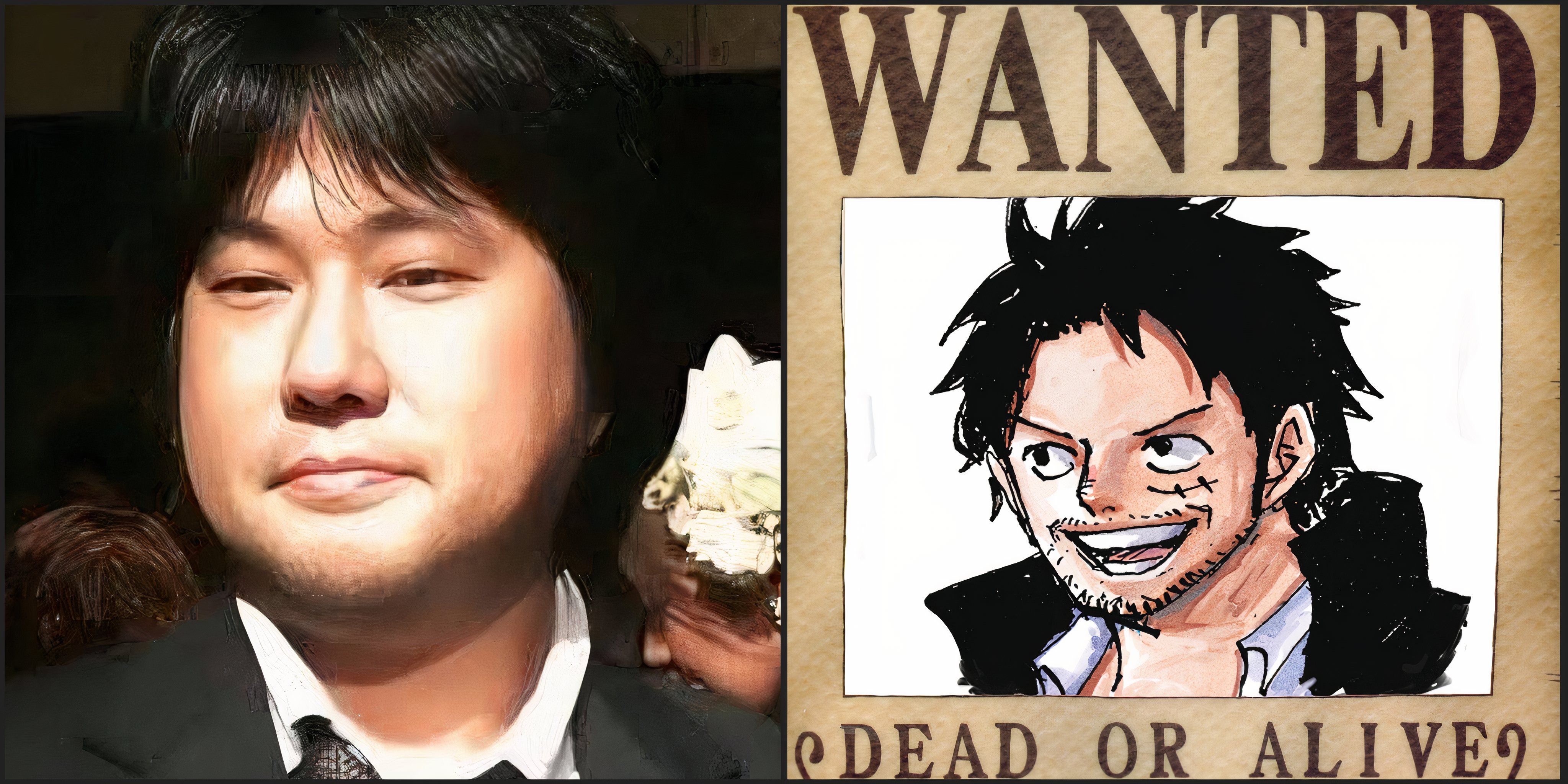
Oda on One Piece Unveils Hidden Truths Behind Laughing Man Legacy

The "Laughing Man" (Warashi) is a figure deeply embedded in Japanese folklore, often depicted as a spectral or demonic entity associated with laughter, deception, and the manipulation of fate. In traditional tales, the Laughing Man appears as an omen of misfortune, particularly in stories involving betrayal or the downfall of powerful figures. One of the most notable references originates from the "Oda Nobunaga" era, where legends speak of a "Laughing Demon" (Warashi Oni) that haunted the warlord during his rise to power. The demon was said to laugh maniacally, foreshadowing Nobunaga’s eventual betrayal and death at the hands of his general, Akechi Mitsuhide. This folklore element carries connotations of inevitability—the idea that no matter how powerful a figure becomes, their fate is predetermined, and their downfall is already inscribed in history.

The surname "Oda" itself carries historical significance in Japan, most famously associated with Oda Nobunaga, the ruthless and visionary warlord who laid the foundation for Japan’s unification in the 16th century. Nobunaga’s legacy is one of ambition, brutality, and strategic genius, but also of paranoia and betrayal. His life mirrors the themes of One Piece, where characters like Doflamingo and Crocodile embody the duality of revolution and tyranny. In folklore, the "Oda" name became synonymous with unpredictable fate, a theme Oda (the One Piece creator) repurposes to critique the World Government’s attempts to control history through fabricated prophecies and manipulated legacies.

Eiichiro Oda’s Reinterpretation: From Folklore to One Piece’s Thematic Backbone

Eiichiro Oda’s incorporation of the "Oda" theme into One Piece is a masterclass in subverting expectations while maintaining cultural authenticity. Unlike traditional folklore, where the Laughing Man is an external force of fate, One Piece presents it as an internalized tool of power. The World Government, through figures like Imu and Crocodile, weaponizes the "Oda" motif to justify their rule, framing themselves as the inheritors of a divine prophecy that ensures order at any cost. This reinterpretation serves multiple narrative functions:

1. A Metaphor for Predetermined Fate: The "Oda" name becomes a self-fulfilling prophecy, where characters like Vivi (a descendant of the "Oda" family) are conditioned to believe their role in history is fixed. The Revolutionaries, including Monkey D. Dragon and Bonney, are raised under the belief that they must uphold the "Oda" legacy, even as they question its validity. 2. Deception as a Governance Tool: The World Government’s use of "Laughing Man" statues and symbols in locations like Skypiea and Dressrosa reinforces the idea that truth is malleable. The statues, often depicted laughing maniacally, serve as a visual reminder of the illusion of control—suggesting that those who laugh last (or loudest) dictate history. 3. Cyclical History and Revolution: The "Oda" theme underscores the repetition of history, where revolutions rise and fall in cycles. Characters like Doflamingo and Akainu represent different facets of this cycle—one as a tyrant who believes in order through fear, the other as a revolutionary who seeks to break the cycle. The "Oda" name thus becomes a symbol of resistance, as seen in the Revolutionary Army’s adoption of it as a rallying cry.

Oda’s genius lies in his ability to layer meaning—the "Oda" theme is simultaneously a historical echo, a psychological weapon, and a narrative device that challenges the protagonist’s journey. While traditional folklore presents the Laughing Man as an external force, One Piece internalizes it, making it a psychological battleground where characters must confront whether their destiny is truly fixed or if they can rewrite history.

Key Appearances of "Oda" and "Laughing Man" in One Piece: A Timeline of Thematic Evolution

The "Oda" and "Laughing Man" motifs emerge sporadically throughout One Piece, often tied to major arcs and character arcs. Below is a timeline mapping their appearances, illustrating how the theme evolves from a folkloric reference to a central narrative pillar.

Arc/Chapter Key Event Characters/Entities Involved Thematic Significance
Chapter 1 ("Romance Dawn") Introduction of the "Oda" family and the "Laughing Man" prophecy. Monkey D. Garp, Monkey D. Dragon, Vivi, Imu The "Oda" name is introduced as a revolutionary legacy, tied to the idea of freedom from oppression. Imu’s manipulation of history foreshadows the World Government’s use of the "Laughing Man" as a tool of control.
Skypiea Arc (Chapters 208–241) Discovery of the "Laughing Man" statues and the "Oda" family’s connection to the World Government. Crocodile, Vivi, Enel, The Gods of Skypiea The statues are revealed as propaganda tools, reinforcing the idea that the World Government rewrites history. Crocodile’s revelation that he is a descendant of the "Oda" family ties the theme to betrayal and hidden identities.
Dressrosa Arc (Chapters 669–710) Doflamingo’s "Donquixote" persona and the "Laughing Man" as a symbol of false prophecy. Doflamingo, Luffy, Law, Kyros Doflamingo’s "Donquixote Doflamingo" title parodies the "Oda" theme, presenting himself as a false revolutionary. The "Laughing Man" becomes a mirror of deception, as Doflamingo’s empire collapses under the weight of his own lies.
Wano Country Arc (Chapters 900–present) Revelations about the "Oda" family’s true history and the "Laughing Man" as a psychological weapon. Akainu, Bonney, Vivi, Kozuki Momonosuke The "Oda" legacy is exposed as a fabrication, with Akainu

The Oda Family in One Piece: A Legacy of Revolution, Betrayal, and the Revolutionary Army’s Shadow War

The name "Oda" in One Piece transcends mere nomenclature—it embodies a revolutionary ethos, a political chessboard, and a labyrinth of hidden loyalties that shape the world’s darkest conflicts. Rooted in the Revolutionary Army’s origins, the Oda legacy is a tapestry of genealogical intrigue, ideological warfare, and strategic betrayals, where bloodlines and ideologies blur. From the shadowy corridors of the World Government to the battlefields of Alabasta, the Oda name serves as both a rallying cry for freedom and a weapon of manipulation, forcing characters and readers alike to question the true nature of allegiance. This section dissects the political architecture of the Oda family, their strategic alliances, and how their influence permeates the Revolutionary Army’s hidden agenda, all while examining the symbolic and literal battles fought under their banner.

Genealogy and Political Influence: The Oda Bloodline and the Revolutionary Army’s Foundations

The Oda family’s historical role in One Piece remains one of the series’ most deliberately ambiguous yet pivotal elements. While Eiichiro Oda has never explicitly confirmed the family’s literal existence, the name’s recurrence—particularly in connection to Monkey D. Dragon and Vivi—suggests a multi-layered legacy: a real bloodline, a symbolic ideal, or a propagandistic tool to unify dissent. The Revolutionary Army, founded by Monkey D. Dragon, operates under the guise of overthrowing the World Government, yet its methods and alliances often mirror the very tyranny it claims to oppose. This duality is central to the Oda theme, where revolutionary rhetoric clashes with authoritarian tactics. The family’s political influence likely stems from:
  • Historical Rebellion: The Oda name may reference Japanese samurai clans (e.g., the Ōda clan of the Sengoku period), whose struggles against feudal lords parallel the Revolutionary Army’s fight against the World Government. This historical parallelism reinforces the theme of cyclical oppression.
  • World Government Infiltration: Theories suggest the Oda family could be a constructed narrative by the World Government to control revolutionary movements, much like how the Poneglyphs manipulate history. If literal, their bloodline might be exploited or erased by the Government to maintain order.
  • Ideological Purity: The name "Oda" may symbolize an uncompromising revolutionary spirit, attracting figures like Vivi (who embodies defiance against tyranny) or Crocodile (whose duality reflects the Oda legacy’s own contradictions).
  • The Revolutionary Army’s hidden agenda lies in its selective use of the Oda name—sometimes as a unifying force, other times as a deceptive facade. For instance, Dragon’s leadership style contrasts with Doflamingo’s manipulation of revolutionary ideals, illustrating how the Oda legacy is both revered and weaponized.

    Character Profile Comparison: Key Oda-Aligned Figures and Their Roles in the Revolutionary Struggle

    The Oda name’s influence extends beyond biology, encompassing symbolic adoptees, ideological successors, and unwitting pawns. Below is a comparative analysis of key figures associated with the Oda legacy, highlighting their roles, traits, and connections to the revolutionary cause.
    Character Role Key Traits Connection to "Oda" Notable Quotes/Actions
    Monkey D. Dragon Founder of the Revolutionary Army; Father of Monkey D. Luffy
    • Charismatic orator with a messianic aura
    • Strategic but morally ambiguous—willing to use violence for an ideal
    • Represents sacrificial leadership (e.g., his imprisonment to protect the Revolutionary Army)
    • Likely namesake: The "Oda" in his surname may derive from a real revolutionary lineage or a pseudonym to legitimize the cause.
    • Symbolic father figure: His ideals are inherited by figures like Vivi, who embody the "Oda spirit" without direct blood ties.
    • World Government’s target: His capture by CP9 (under Doflamingo’s orders) underscores the Government’s fear of the Oda legacy.
    "The world is a stage, and we are all actors. But some of us are forced to play roles we never chose." —Implied in his speeches, emphasizing the Revolutionary Army’s narrative of liberation.
    Vivi Former Princess of Alabasta; Revolutionary ally
    • Politically astute—navigates court intrigue with maturity beyond her years
    • Unwavering loyalty to allies (e.g., Luffy, Nami, Sanji)
    • Symbol of resistance: Her arc in Alabasta mirrors the Oda theme’s core—breaking cycles of tyranny
    • Symbolic "daughter" of the Revolution: Though not biologically linked, she embodies the Oda legacy’s defiance against oppression.
    • Alabasta as a microcosm: Her struggle against Crocodile (a Revolutionary-turned-traitor) reflects the betrayals within the Oda cause.
    • Legacy of leadership: Her refusal to flee Alabasta ("I won’t let anyone else die for me") aligns with Dragon’s sacrificial ethos.
    "I won’t let anyone else die for me... I’ll protect Alabasta myself." —Rejects passive reliance on others, embodying the Oda spirit’s self-determination.
    Crocodile Former Revolutionary; Warlord of the Sea; Alabasta’s usurper
    • Master manipulator—exploits revolutionary ideals for personal gain
    • Dual allegiance: Serves the World Government while claiming revolutionary roots
    • Psychological warfare expert: Uses fear and deception to control nations
    • Betrayer of the Oda legacy: His defection exposes the fragility of revolutionary purity.
    • Possible Oda descendant or ally: His knowledge of Dragon’s imprisonment suggests a deeper connection.
    • Symbol of corruption: His rise mirrors how the Revolutionary Army’s hidden agenda can mirror its enemies.
    "You think you’re fighting for freedom? Freedom is just another word for chaos." —Reveals his cynical view of the Revolutionary Army’s ideals.
    Doflamingo Former Revolutionary; Yonko; Master of the Dolphin
    • Charismatic demagogue: Uses revolutionary rhetoric to rally followers
    • <

      The "Laughing Man" and the "Oda" Connection: Unraveling the Mystery of the Skull Island Prophecy

      The "Laughing Man" stands as one of One Piece’s most enigmatic and recurring motifs, a spectral figure whose eerie presence bridges myth, revolution, and the cyclical nature of history. Emerging from the ancient ruins of Skypiea, this entity is not merely a ghostly warning but a living prophecy, intricately woven into the Oda legacy—a symbol of both destruction and liberation. Its connection to the Void Century, Poneglyphs, and the Revolutionary Army transforms it from a mere omen into a catalyst for change, one that forces characters like Nico Robin, Brook, and Luffy to confront their deepest fears and destinies. Through its visceral imagery, prophetic inscriptions, and evolving narrative role, the Laughing Man becomes a mirror reflecting the inescapable weight of history and the unbreakable will of those who defy it.

      Origins of the Laughing Man in Skypiea: The Prophecy Carved in Stone

      The Laughing Man first manifests in Skypiea, where its origins are tied to the ancient Sky Islanders’ desperate struggle against the God Valley’s oppressive rule. The prophecy is etched into statues scattered across the islands, each depicting a skeletal figure with a grinning skull, missing eyes, and elongated limbs—an embodiment of death laughing at the living. These statues, often found near Poneglyphs or in ruined temples, carry inscriptions warning of a "great revolution" or "the fall of the sky", phrases that resonate with the Oda family’s own fight against tyranny. The Sky Islanders interpreted the Laughing Man as an omen of impending doom, a harbinger of the God Valley’s collapse—a prophecy that ultimately came true when the Void Century began. The statues’ positioning near sacred sites suggests they were deliberately placed as warnings, reinforcing the idea that the Laughing Man is not just a random specter but a guardian of forgotten truths. The lack of eyes in its depictions symbolizes blindness to the inevitable, while its skeletal form represents the inevitability of death in the cycle of revolution.

      Visual and Symbolic Depictions: From Skypiea to Wano

      The Laughing Man’s artistic style remains consistent yet adaptable, evolving subtly across arcs to reflect the changing tone of its prophecy.
    • Artistic Style:
    • The figure is almost universally depicted as a skeletal humanoid, often with exaggerated, jagged bones and a fixed, maniacal grin. In Skypiea, its form is stylized and almost cartoonish, emphasizing grotesque humor—a stark contrast to the seriousness of its message. Later, in arcs like Wano, the depiction becomes more refined and terrifying, with sharper edges and a more pronounced sense of decay, mirroring the darkness of the times.
    • Symbolic Colors:
    • The Laughing Man is predominantly black and white, colors that evoke duality—life and death, order and chaos. In some depictions, red accents appear, particularly around the mouth or eyes, symbolizing bloodshed, passion, or revolution. These colors reinforce its role as a force of disruption, one that bleeds into history like the Oda family’s fight for freedom.
    • Contextual Changes:
    • In Skypiea, the Laughing Man is a distant, almost mythical threat, tied to the ancient past. By the time of Wano, its presence becomes immediate and personal, with Brook directly encountering its living manifestation in the Oden’s final moments. This shift underscores the prophecy’s evolution—from a warning of the past to a foreshadowing of the future, where the Laughing Man’s laughter may signal the beginning of the end for the World Government.

      Comparative Analysis: The Laughing Man in One Piece vs. Japanese Folklore

      While the Laughing Man draws inspiration from Japanese yōkai (supernatural creatures), its interpretation in One Piece diverges significantly, blending folklore with political allegory.
      Element One Piece Interpretation Traditional Japanese Folklore Differences/Similarities
      Appearance Skeletal figures with exaggerated grins, missing eyes, and elongated limbs; often depicted in statues or as a spectral presence. Ghostly figures like Kodama (tree spirits) or Noppera-bō (faceless ghosts), sometimes humanoid but often more abstract. One Piece emphasizes grotesque, almost comedic horror, while folklore leans toward mysterious, ambiguous terror. The grin is unique to One Piece, tying into the tragicomic tone of the series.
      Purpose An omen of revolution, tragedy, or the collapse of oppressive systems, directly linked to the Oda legacy and the World Government’s downfall. Omens of death, misfortune, or curses, often tied to personal vengeance (e.g., Ubume) or natural disasters (e.g., Tengu). One Piece politicizes the folklore, making the Laughing Man a symbol of systemic change rather than individual fate. The Revolutionary Army’s struggle mirrors its role as a force of liberation.
      Symbolism Represents the inevitability of change, the laughter of history, and the cost of freedom. Its appearance often coincides with major turning points in the story. Symbolizes unresolved grief, unseen dangers, or the supernatural’s interference in human affairs. One Piece expands the symbolism to include collective struggle, while folklore focuses on individual or communal dread. The grinning skull is a deliberate subversion, turning fear into dark humor.
      Cultural Context Rooted in Skypiea’s history and the Void Century, reflecting Oda Eiichiro’s themes of rebellion against authority. Deeply tied to Shinto beliefs, Buddhist influences, and regional legends, often serving as moral warnings or explanations for the unexplained. One Piece recontextualizes folklore to fit a global, modern narrative, while traditional tales remain culturally specific. The Laughing Man’s universal appeal lies in its timeless message of defiance.

      Psychological Impact on Characters: Facing the Laughing Man’s Prophecy

      The Laughing Man’s presence haunts characters both literally and metaphorically, forcing them to confront their fears, embrace their pasts, or accept their destinies.
    • Nico Robin:
    • As an archaeologist and historian, Robin is obsessed with uncovering the truth behind the Void Century and the Laughing Man’s prophecies. Her fear of the past—symbolized by the Laughing Man’s laughter—manifests in her avoidance of her own history (her ties to the Revolutionary Army). When she finally faces the truth in Skypiea and later arcs, she transcends her trauma, proving that knowledge, not fear, is the key to liberation.
    • Brook:
    • Brook’s encounter with the Laughing Man in Wano is direct and visceral, tied to his mortality and the weight of history. The skeletal figure’s laughter mirrors Brook’s own fear of death, but it also validates his existence—as a Revolutionary, he is part of the cycle of change the Laughing Man represents. His resolution to

      "Oda" as a Metaphor for Destiny and the Will of D.: Luffy’s Journey Through the Lens of the Theme

      Monkey D. Luffy’s existence in One Piece is fundamentally tied to the Oda legacy—a prophecy, a curse, and a defiant declaration against fate. His journey from a carefree child who eats the Gum-Gum Fruit to the Pirate King mirrors the Laughing Man’s duality: both a harbinger of doom and a symbol of rebellion. The "Will of D.", passed down through generations, is not merely a genetic trait but a philosophical stance—a refusal to be bound by destiny. Luffy’s arc reveals how the Oda theme evolves from an abstract myth into a tangible force shaping his choices, struggles, and triumphs. The Laughing Man’s prophecy looms over Luffy like a shadow, yet his response is not submission but transformation. His laughter in the face of death, his defiance of Skull Island’s curse, and his embrace of Gear 5 as "Haki of the King" all demonstrate a reinterpretation of fate. Unlike the Oda family, who were trapped in a cycle of revolution and betrayal, Luffy rewrites the script—not by destroying the prophecy, but by outliving it.

      Luffy’s Character Arc Through the "Oda" Lens: Destiny as a Choice

      Luffy’s growth from an unrefined child to a leader capable of wielding "Haki of the King" is a direct engagement with the Oda theme. His journey can be divided into three phases: naïve defiance, confrontation with prophecy, and transcendence of myth. Each phase aligns with key moments where he either embodies or subverts the Laughing Man’s legacy. Phase 1: Naïve Defiance (East Blue – Alabasta) Before encountering the Laughing Man’s direct influence, Luffy’s defiance is instinctive. His refusal to accept defeat—whether against Buggy, Don Krieg, or the World Government’s oppression—sets the tone for his later struggles. The Straw Hat Pirates’ motto, "Freedom!", becomes his personal mantra against fate. Even in the East Blue, where the Oda myth is distant, his actions foreshadow a clash with destiny:
    • His laughter during battles (e.g., against Smoker) mirrors the Laughing Man’s mockery of death.
    • His hat, a symbol of his unconventional path, contrasts with the structured hierarchies of the Marineford or Revolutionary Army.
    • Phase 2: Confrontation with Prophecy (Marineford – Wano) The Laughing Man’s prophecy becomes undeniable at Marineford, where Luffy’s laughter in the face of death (as he survives Aokiji’s execution) directly invokes the myth. This moment is not just a plot device but a thematic pivot: Luffy laughs because he refuses to die, turning the prophecy into a personal challenge. His confrontation with the "Laughing Man" statue in Wano further solidifies this:
    • The statue’s broken chains symbolize freedom from fate, aligning with Luffy’s Gear 5 awakening.
    • His declaration, "I won’t let anyone decide my fate!", redefines the Oda legacy from curse to choice.
    • Phase 3: Transcendence of Myth (Gear 5 – Final Saga) Gear 5’s "Haki of the King" is the culmination of Luffy’s engagement with destiny. The "Oda" name, historically tied to royalty and revolution, now becomes a tool of leadership. His Haki is not just power—it’s a manifestation of his will to rewrite history:
    • The "King" in Gear 5 subverts the Oda family’s revolutionary past, positioning Luffy as a king who rules by freedom, not oppression.
    • His hat, now a crown of straw, contrasts with the golden halos of royalty, reinforcing his anti-establishment stance.
    • Symbolic Interpretations of the Straw Hat: Destiny Worn as a Choice

      The straw hat is the most enduring symbol of Luffy’s relationship with destiny. Unlike the Oda family’s red scarves (a mark of rebellion) or the World Government’s uniforms, Luffy’s hat is unstructured, durable, and personal. Its symbolism evolves alongside his character: 1. The Hat as a Metaphor for Destiny
    • The hat is not chosen by Luffy—it is given to him by Shanks, a man who lived beyond his fate. This implies that destiny is not predetermined but inherited.
    • The straw’s fragility vs. durability mirrors the Laughing Man’s ephemeral nature: while the myth fades, Luffy’s will persists.
    • 2. Contrast with Other Hats in One Piece Luffy’s hat stands apart from other headgear in the series, each representing a different attitude toward fate:
    • Shanks’ hat: A sailor’s cap, symbolizing loyalty to a path (his Red-Hair Pirates legacy).
    • Zoro’s headband: A sword’s grip, representing discipline and justice—tools to cut through deception.
    • Sanji’s bandana: A mask of elegance, hiding his past traumas but also defining his identity.
    • Brook’s hat: A skeleton’s grin, embodying rebirth and cycles of life/death—directly tied to the Laughing Man’s themes.
    • Unlike these, Luffy’s hat is unadorned, reinforcing his individuality against structured destinies.

      Character Motivations: How the "Oda" Theme Shapes Luffy’s Crew

      Luffy’s crewmates each represent a unique response to the "Oda" theme, whether through defiance, acceptance, or reinterpretation. Below is a comparative table of their motivations and connections to the theme:
      Character Motivation Connection to "Oda" How "Oda" Shapes Their Journey
      Luffy Become Pirate King to fulfill his dream of freedom Destiny vs. free will; laughter as defiance of prophecy His laughter becomes a weapon against fate, turning the Laughing Man’s curse into a personal legend.
      Robin Uncover the truth of the world’s history Fear of the "Laughing Man" as a child; knowledge as power Her archaeological pursuit is a rewriting of history, challenging the Oda family’s revolutionary narrative.
      Zoro Become the World’s Strongest Swordsmith Sword as a tool to cut through lies (mirroring the Oda’s revolutionary blade) His swordplay is a metaphor for justice, aligning with the Oda’s fight against oppression.
      Nami Protect her crew and navigate her own path Weather as fate’s unpredictability; her maps as control over destiny Her navigation skills represent acceptance and mastery of fate, unlike Luffy’s defiance.
      Brook Live forever and preserve his music Life-death cycles; Laughing Man as a skeletal omen His rebirths mirror the Laughing Man’s ephemeral nature, yet his music transcends death.
      The "Oda" theme in One Piece is more than a recurring symbol—it is the series’ silent narrator, a ghost that haunts every revolution, every betrayal, and every laugh shared in the face of oblivion. From the Revolutionary Army’s secretive lineage to Luffy’s defiant grin at Marineford, the motif forces readers to confront an uncomfortable truth: destiny is not a straight path but a labyrinth of choices, where names like "Oda" become both a shackle and a shield. As the story hurtles toward its climax, the "Laughing Man" remains an unresolved question—will the world break free from its cycles, or will history’s darkest jokes repeat themselves? One thing is certain: in One Piece, the past is never truly dead, and the laughter of the unknown is always one step behind.